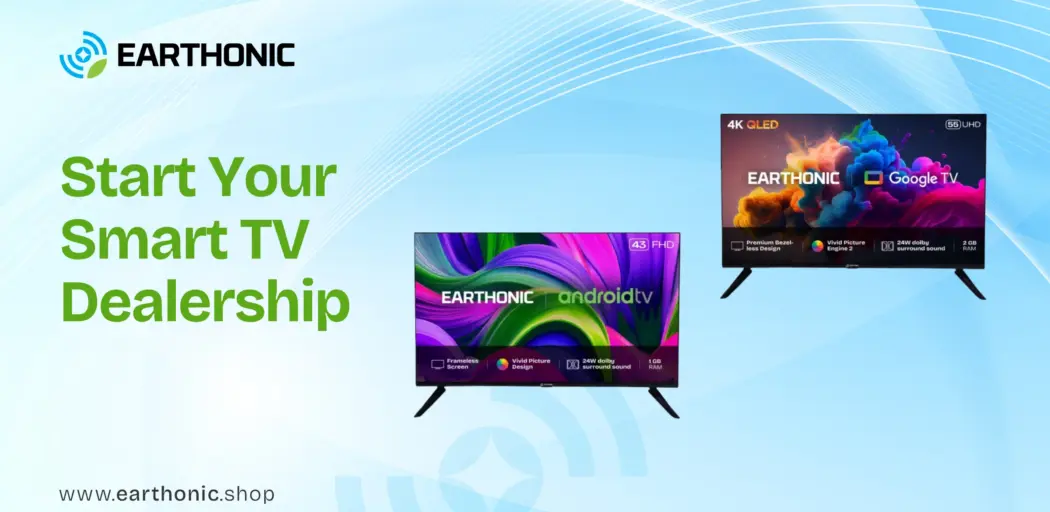
The Indian smart TV market is booming. With rising disposable incomes, affordable 4K panels, and streaming content exploding across the country, consumers are upgrading their home entertainment like never before. For entrepreneurs, this represents a genuine opportunity.
But becoming a smart TV dealer is not as simple as finding a supplier and opening a shop. There are logistics to understand, margins to evaluate, and territory rights to secure. Whether you are looking for an electronics dealership opportunity in Gujarat or anywhere else in India, here is what you actually need to know before you start.
Partner with a growing Indian brand.
Explore dealership opportunities with Earthonic’s Smart TV range.
Understand What Type of Dealer You Want to Be
Not all dealers are the same. The smart TV supply chain has distinct tiers, each with different investment requirements and responsibilities.
|
Dealer Type |
Role |
Typical Investment Range |
Margin Potential |
|
Distributor |
Buys directly from manufacturer, supplies to retailers |
₹10 Lakh – ₹50 Lakh |
5% – 10% |
|
Wholesaler |
Buys in bulk from distributors, sells to smaller retailers |
₹5 Lakh – ₹25 Lakh |
3% – 8% |
|
Retailer |
Sells directly to end consumers |
₹50,000 – ₹5 Lakh |
10% – 25% |
|
Franchise |
Operates under an existing brand’s retail network |
₹50,000 – ₹2 Lakh (varies) |
15% – 25% |
What this means for you: If you want to become an LED TV distributor, you need significant capital and warehouse space. If you want to start small, retail or franchise models are more accessible. Some brands offer dealership opportunities with investments as low as ₹10,000 to ₹50,000, with margins around 15%.
Evaluate the Smart TV Market Opportunity
The numbers tell a compelling story. The Indian consumer electronics market is seeing strong growth, with retailers expanding aggressively into Tier-II and Tier-III cities.
Key market trends to know:
- Tier-II markets are the next frontier. Rising middle-class incomes and lower retail saturation compared to metros make these cities attractive for electronics retail.
- Physical retail is thriving. Bhatia Communications, which operates 291 stores across Western India, maintains an impressive 98% customer conversion rate. The “touch-and-feel” model remains powerful in electronics.
- Omni-channel is the future. Retailers are using physical stores as mini-warehouses for faster delivery and click-and-collect services.
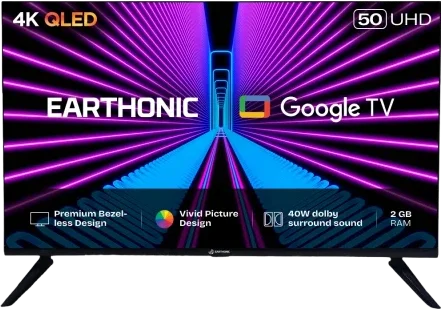
Real-world example: A wholesaler in Bengaluru dealing in LED TVs reports an annual turnover of ₹10-25 crore. Another distributor in Gujarat working with multiple electronics brands reports turnover between ₹25-100 crore.
See the products you could be selling.
Discover Earthonic’s 4K UHD Smart TVs and Nova TV series.
Calculate Your Investment and Margins
The smart TV dealer business requires careful financial planning. Here is what to expect based on real industry data.
Typical Investment Breakdown
|
Cost Category |
Estimated Range |
Notes |
|
Initial Inventory |
₹5 Lakh – ₹25 Lakh |
Depends on number of SKUs and screen sizes |
|
Showroom/Store Setup |
₹8 Lakh – ₹10 Lakh per store |
Interior, demo units, signage |
|
Working Capital |
₹33 Lakh – ₹35 Lakh per store |
For ongoing inventory and operations |
|
Licenses and Registrations |
₹50,000 – ₹2 Lakh |
GST, shop registration, etc. |
Expected Margins
Industry benchmarks suggest dealer margins typically range between 15% and 25% depending on the brand and your role in the supply chain. For a retail dealer selling direct to consumers, margins can be higher than for distributors.
Payback period: Established electronics retailers report payback periods of 12-13 months for new stores, with return on investment (ROI) around 65% for some dealership models.
Want the Distance Math Behind These Sizes?
See exactly how seating distance, room shape, and screen size line up for 50, 55, and 65-inch TVs.
Choose the Right Brand to Partner With
This is the most important decision you will make. Partnering with a brand that has strong product quality, reliable supply chains, and local support can make or break your business.
Questions to ask any brand before signing up:
- What is the warranty policy? Earthonic offers 2-year warranties on its Smart TVs, which is competitive in the market.
- What is the return/replacement policy for defective units?
- What marketing support do you provide?
- Do I get exclusive territory rights?
- What is the typical delivery timeline from order placement?
Stat to note: The Indian TV market has seen multiple brands enter and exit. JVC recently re-entered the market through a licensing agreement with Super Plastronics, highlighting the importance of stable partnerships. Choose a brand with a long-term vision.
Set Up Your Store and Operations
For an LED TV dealership, your physical presence matters. Customers want to see the picture quality, hear the audio, and compare models side by side.
Store Requirements
|
Requirement |
Typical Specification |
|
Floor Area |
200 – 800 sq. ft. |
|
Location |
High-footfall area, preferably near other electronics stores |
|
Demo Setup |
Multiple TV sizes with 4K content playing |
|
Staff Training |
Product knowledge and customer handling |
The offline advantage: Physical stores have a “touch-and-feel” advantage that e-commerce cannot match. Customers trust what they can see, especially for high-value purchases like a smart TV dealership in Ahmedabad or any other city .
Why Earthonic Is the Smart Choice for Indian Homes
Learn why Indian consumers are choosing Earthonic.
Build Your Customer Base
Once your store is set up, you need to attract buyers. Here is what works in the electronics retail space.
Effective customer acquisition strategies:
- High-impact loyalty programs: Retailers like Bhatia Communications use upgradation offers and loyalty programs to keep customers coming back.
- Flexible financing options: Partnerships with banks for consumer financing convert browsers into buyers.
- After-sales support: Physical walk-ins for technical support foster long-term trust and repeat purchases.
- Local marketing: Target local communities with promotional offers during festive seasons.
The key metric: Industry players report conversion rates of 98% in well-run stores. That means almost everyone who walks in with serious intent ends up buying.
Understand the Logistics
Smart TVs are bulky and fragile. Your supply chain needs to handle them properly.
Logistics considerations:
- Storage: Clean, dry warehouse space with proper shelving
- Delivery: Reliable transport partners for customer deliveries
- Installation: Ability to offer professional wall mounting (or partnership with installation services)
- Inventory management: Track stock levels to avoid overstocking or stockouts
Stat to note: Companies like Cellecor Gadgets are expanding their retail presence through strategic partnerships, with a single purchase order worth ₹25 million marking the beginning of anticipated business of ₹600-800 million over 12 months. This shows the scale that is possible with the right partnerships.
Samsung TV Price vs Indian Brands
Understand the value proposition.
Common Mistakes First-Time Dealers Make
Avoid these pitfalls to ensure a smoother start.
|
Mistake |
Why It Hurts |
The Fix |
|
Ignoring location |
Low footfall = low sales |
Research footfall before signing a lease |
|
Overstocking one size |
43″ sells differently than 75″ |
Stock a balanced mix based on local demand |
|
Underestimating working capital |
Cash flow crunch |
Plan for 6 months of operating expenses |
|
Poor demo setup |
Customers can’t compare |
Invest in good demo lighting and content |
|
Weak after-sales support |
Lost repeat business |
Build a reputation for service |
The Final Word: Is This the Right Move for You?
The smart TV market in India is growing, and the opportunity is real. Whether you are looking for a TV dealer business in a metro city or exploring an electronics dealership opportunity in Gujarat, the fundamentals are the same.
Do your research. Calculate your numbers carefully. Partner with a brand that supports you. And remember, in electronics retail, trust and service build the longest-lasting businesses.
FAQs
1. How can I become a smart TV dealer in India?
To become a smart TV dealer, register your business (GST and local trade licenses), secure a commercial retail space, choose your operating model (retailer or distributor), and apply directly to an authorized manufacturer like Earthonic.
2. What investment is required to start a TV dealership?
A small retail or franchise dealership can start with ₹50,000 to ₹5 Lakh. A full-scale experiential showroom typically requires ₹15 Lakh to ₹45 Lakh, covering inventory, interior demo setup, working capital, and licensing.
3. Is a smart TV dealership profitable in India?
Yes. With rising demand for 4K streaming displays across Tier-II and Tier-III markets, smart TV dealers typically earn profit margins ranging between 10% and 25%, often achieving store payback within 12 to 13 months.
4. What should I look for in a smart TV brand partnership?
Key factors include competitive profit margins, a reliable warranty policy (e.g., Earthonic’s 2-year warranty), marketing and point-of-sale collateral support, exclusive territory rights, and consistent product supply.
5. Can a small electronics retailer become a smart TV dealer?
Yes. Small electronics retailers can partner through entry-level retail dealership programs that require minimal upfront inventory investment while offering direct manufacturer support.
6. What products should a TV dealer stock?
A balanced inventory includes entry-level HD/FHD models (32″ to 43″) for budget-conscious buyers, alongside fast-moving 4K UHD Smart TVs and premium large panels (55″+) to capture high-margin sales.
7. What are the benefits of becoming an authorized TV dealer?
Authorized dealers receive wholesale pricing, marketing and branding collateral, warranty back-up, dedicated customer lead referrals, and exclusive sales territory protection.
8. How do I apply for an Earthonic dealership?
Visit the official Earthonic website, navigate to the Dealership / Partner page, submit your business details and location info, and an Earthonic regional representative will contact you with product catalogs and onboarding steps.