
When Drive to Survive first aired on Netflix in 2019, it did not just document a Formula 1 season. It rewired how an entire generation relates to the sport. Before the series, F1 was widely perceived as technical, exclusive, and difficult to follow without years of prior interest. After it, the sport’s global fanbase swelled to 827 million people by 2025, with 43 per cent of fans now under the age of 35, and women accounting for 42 per cent of the global audience, a figure that has risen sharply since the show’s debut (Nielsen Sports, 2025).
India, specifically, felt this shift clearly. According to Red Bull’s own data, Drive to Survive topped Netflix viewing rankings in 56 countries when season four was released in 2022, including India, where it cracked the platform’s weekly Top 10. Season 7, released in March 2025, remained Netflix’s most-watched sports documentary of the first half of 2025 with 10.4 million views (Sports Business Journal, 2025).
But here’s the part most fans overlook. Drive to Survive is not just a sports documentary. It is a cinematic viewing experience, shot with broadcast-grade cameras, with a carefully produced Dolby audio mix, and dramatic visual pacing built for large-screen consumption. Most fans are watching it on a TV that was never designed for that. This guide lays out what actually changes when you upgrade to the right setup, and why it matters for the best TV for Drive to Survive experience.
1. What Makes Drive to Survive Different from a Standard Sports Broadcast?
Unlike live race coverage, Drive to Survive is produced with the same technical standards as a premium Netflix original series. Each episode is:
- Shot in high-resolution cinema-grade formats, with rich colour grading and dramatic contrast between dark paddock interiors and bright track exteriors
- Mixed with a full Dolby audio soundtrack, including immersive team radio, tyre scream, crowd noise, and a layered music score that shifts the emotional register of each scene
- Mastered for HDR streaming on Netflix Premium, which delivers a noticeably wider range of brightness and colour than standard dynamic range content
- Structured around tightly edited storytelling, with rapid cuts and slow-motion crash replays that reveal detail at frame level, all of which is lost on a low-resolution or poorly calibrated display
In short, this is content built for a cinema-quality display, not a budget panel or a small bedroom screen. Watching it on the right TV is not about luxury. It’s about actually receiving what the production team put into every frame.
2. The Specs That Change the Drive to Survive Experience
4K Resolution: Where the Detail Lives
Netflix streams Drive to Survive in 4K UHD on Netflix Premium plans. On a Full HD television, that feed is downscaled before it reaches your eyes, which means the detail in helmet cam footage, the texture in a tyre wall at impact speed, and the fine grain of a wet paddock scene are all compressed. A 4K panel receives and renders each of those details as the production intended. See our deep dive on why this matters beyond just resolution numbers : 4K Smart TV Benefits Explained.
HDR: The Spec That Changes Drama
Drive to Survive is mastered with HDR, which means it is specifically graded to use the full brightness and shadow range that HDR-capable displays can produce. In practice, this means:
- Dark garage scenes show far more depth and shadow detail rather than crushing to a flat black
- Bright track shots under direct sunlight retain highlight detail in the sky and on car bodywork
- The contrast between a dimly lit driver interview and the brilliance of a race start looks dramatically different on an HDR panel versus a standard one
The visual difference between HDR and non-HDR playback of a cinematic series is equivalent to comparing colour film to black-and-white. It is that significant, and Drive to Survive is one of the strongest use cases for it on Netflix.
Dolby Audio: The Experience Half the Fans Are Missing
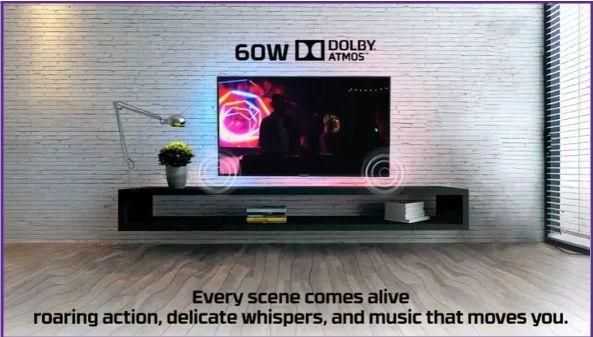
The audio mix on Drive to Survive is one of the most underappreciated production elements of the show. The layered team radio, the bass presence of a V6 hybrid engine at full revs, the crowd noise building into a podium celebration- these are all produced in a multi-channel Dolby audio format. Thin, built-in TV speakers flatten the entire mix into a single narrow sound field. A Dolby-certified TV paired with a soundbar or external audio system restores the spatial separation the production team built into the track. For a full breakdown on audio formats in Indian Smart TVs, see: Dolby Atmos vs DTS: Which Matters for Your TV?.
Google TV or Android TV: Which Should You Choose for Netflix?
Want the Distance Math Behind These Sizes?
See exactly how seating distance, room shape, and screen size line up for 50, 55, and 65-inch TVs.
3. Drive to Survive Viewing Experience: TV Setup Comparison
Here’s a clear breakdown of what changes between a basic setup and a purpose-built cinematic viewing setup for Drive to Survive:
|
Viewing Element |
Basic Setup |
Cinematic Setup |
|
Resolution |
Full HD (1080p, downscaled) |
4K UHD native |
|
HDR Playback |
None, SDR only |
HDR10 or Dolby Vision |
|
Audio |
Thin built-in speakers |
Dolby Audio + soundbar |
|
Screen Size |
32 to 43 inches |
65 to 85 inches |
|
Smart Platform |
Basic / no streaming OS |
Google TV with Netflix 4K |
|
Panel Type |
Standard LED |
QLED or VA panel |
|
Immersive Factor |
Low, background viewing |
High, cinematic feel |
The difference between the two setups is not marginal. Drive to Survive was edited and graded for the cinematic setup column. Everything in the basic setup column represents a compromise the production team did not intend.
QLED vs LED: Does the Panel Type Actually Matter for Netflix Content?
Drive to Survive’s colour grading and HDR mastering reveal themselves differently on different panel types. Here’s what to look for.
4. Can I Stream Drive to Survive in 4K in India?
Yes. Netflix offers Drive to Survive in 4K UHD on its Premium subscription tier. This requires a stable internet connection of at least 25 Mbps for consistent 4K playback, a Netflix Premium account, and a 4K Smart TV with Netflix-certified 4K streaming built into the platform. Google TV and Android TV devices generally support Netflix 4K natively, as long as the TV is Netflix-certified at 4K rather than just 1080p.
The Netflix in 4K experience on Drive to Survive also includes HDR on supported content, which means the full visual grade of the series is available to Indian viewers at home, without any additional hardware beyond a compatible Smart TV and subscription.
5. What Screen Size Actually Does for a Cinematic Series
Size changes the psychology of how you watch. Here’s what each size band actually delivers for cinematic content like Drive to Survive:
- 55 inches: Suitable for close single-viewer setups at 5 to 7 feet. Fine for casual watching, but the sense of immersion in wide paddock and track shots is limited.
- 65 inches: The practical sweet spot for most Indian living rooms. At 7 to 8.5 feet, it fills enough of your field of vision to create a genuine cinematic presence. Driver close-ups and crash replays hit differently at this size.
- 75 to 85 inches: This is where Drive to Survive stops feeling like a TV show and starts feeling like a cinema screen. The production’s visual language, with its wide angles and slow-motion sequences, was built for display at this scale.
For a detailed size guide matched to room dimensions and seating distance, see our guide on the benefits of a 4K Smart TV at different sizes.
Final Word
Drive to Survive did not just make F1 more popular. It changed the benchmark for what a sports documentary can look and feel like. Eight seasons in, it remains Netflix’s most-watched sports documentary and the single biggest reason millions of Indian fans are now deeply invested in a sport they had never followed before. That level of production quality deserves a display built to match it. The F1 streaming TV experience that Drive to Survive was designed for requires 4K, HDR, Dolby audio, and a screen large enough to let the show’s visual language actually breathe.
If you’ve spent five seasons watching this show on whatever screen happened to be in the room, season eight is a good time to change that.
Built for Cinematic Viewing. Built for Drive to Survive.
Explore Earthonic’s 65-inch, 75-inch, and 85-inch 4K UHD Smart LED TVs with Google TV, HDR support, and Dolby Audio for the full Drive to Survive experience.
FAQs
1. What TV is best for Netflix sports documentaries?
The best TV for Netflix sports documentaries like Drive to Survive combines 4K UHD resolution, HDR10 or Dolby Vision support, a Google TV or Android TV smart platform with Netflix 4K certification, and a screen size of 65 inches or larger for a genuinely cinematic viewing experience.
2. Does Dolby Atmos improve the viewing experience?
Yes, significantly for content like Drive to Survive, which features a layered multi-channel audio mix. Dolby Atmos creates spatial depth in the sound field, separating team radio, engine sound, crowd noise, and music into distinct audio layers that standard stereo speakers collapse into a single flat track.
3. Is HDR important for Drive to Survive?
Yes. Drive to Survive is mastered in HDR, which means its dark scenes, high-contrast lighting transitions, and rich colour grade are specifically intended for HDR-capable displays. On a non-HDR panel, the image is visibly flatter and loses the cinematic depth the show was graded for.
4. Which TV size is best for cinematic content?
For cinematic content at a standard Indian living room viewing distance of 7 to 10 feet, a 65-inch to 75-inch TV delivers the best balance of immersive screen presence and comfortable viewing. An 85-inch screen suits rooms with seating beyond 8.5 feet and delivers the closest to a true cinema feel at home.
5. Is Google TV better for streaming?
Google TV offers a more refined streaming experience than older Android TV versions, with better content discovery, a cleaner interface, and more consistent 4K Netflix certification across devices. For streaming-first users, it is the recommended platform for Drive to Survive and other Netflix originals.
6. Can I stream Drive to Survive in 4K?
Yes. Drive to Survive is available in 4K UHD with HDR on Netflix Premium plans in India. You need a stable connection of at least 25 Mbps, a Netflix Premium subscription, and a 4K Smart TV with Netflix 4K certification to access the full resolution and HDR grade.
7. Does screen size affect immersion?
Yes. Research in display science consistently shows that when a screen fills more of your natural field of vision, the brain registers the content as more immersive and present. For cinematic content like Drive to Survive, moving from a 43-inch to a 65-inch or 75-inch screen is a perceptible qualitative shift, not just a bigger image of the same experience.
8. Which Earthonic TV is best for Netflix?
The Earthonic 65-inch, 75-inch, and 85-inch 4K UHD Smart LED TVs run on Google TV or Android TV with native Netflix app support, 4K streaming certification, and HDR playback, making them the strongest choices in the range for a cinematic Drive to Survive and Netflix viewing experience.